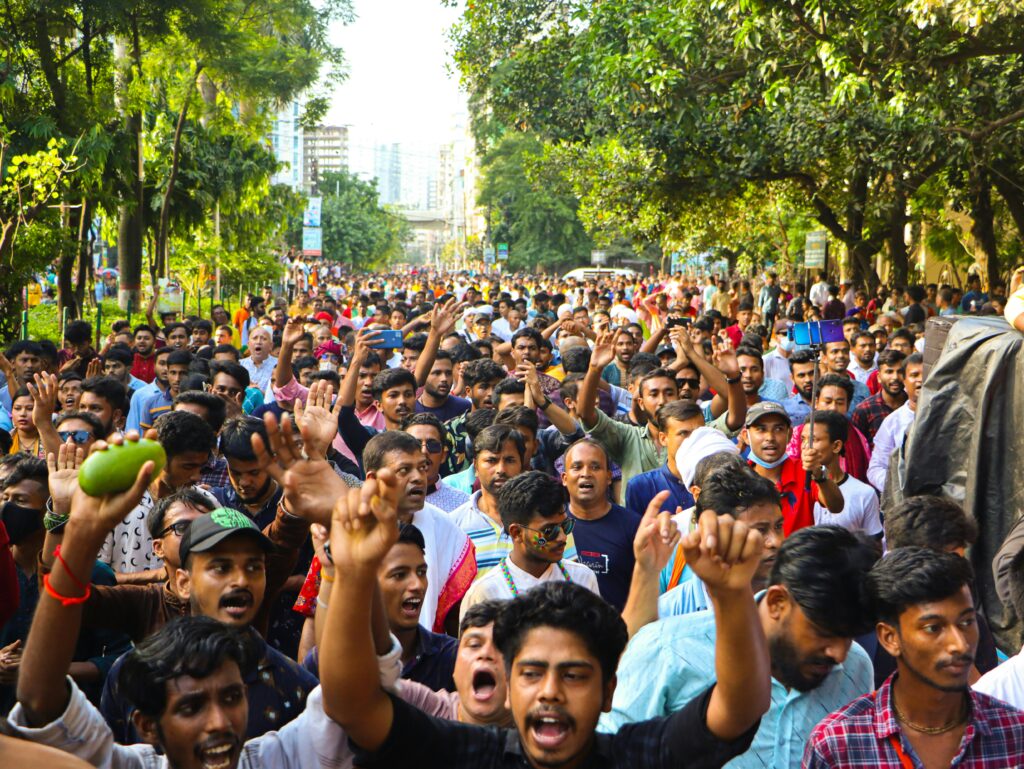
In Dhaka, Bangladesh, a pivotal legal proceeding commenced on Sunday, marking a significant moment in the country’s political landscape. A special court is now prosecuting eight former police officials linked to the violent suppression of protesters during a tumultuous period last year. This trial stems from the tragic events of August 5, when six demonstrators lost their lives amidst widespread unrest that ultimately led to the departure of former Prime Minister Sheikh Hasina from the country.
The defendants face serious charges of crimes against humanity, with four of the accused currently in custody while the remaining four are being tried in absentia. Chief Prosecutor Tajul Islam announced the initiation of the trial, expressing confidence in the prosecution’s ability to substantiate the charges against the accused officials. “We believe that the evidence presented will clearly demonstrate the crimes committed by the defendants,” he stated.
This trial is unprecedented, being the first formal legal action taken in connection with the violence that erupted during a student-led uprising, which played a crucial role in ending Hasina’s prolonged rule of 15 years. The United Nations has reported that approximately 1,400 individuals lost their lives during the crackdown on protesters in the summer of 2024.
Among those facing trial is Habibur Rahman, the former police commissioner of Dhaka, who is being tried in absentia. Following the outbreak of violence, Hasina fled to India, her historical ally, and remains in self-imposed exile, defying attempts by the Bangladeshi government to extradite her to face charges of crimes against humanity.
The prosecution’s case is bolstered by various forms of evidence, including video documentation of the violent incidents and recordings purportedly capturing Hasina instructing her officials to use lethal force against the demonstrators. Islam detailed that the charges against the eight men encompass various degrees of responsibility, from direct orders to participation in the actions that led to the loss of life.
The commencement of these trials is a crucial demand from several political factions in Bangladesh as the nation approaches upcoming elections, which the interim government has pledged will occur by June 2026. The International Crimes Tribunal (ICT), established by Hasina in 2009, has previously been criticized for its role in political persecution, having sentenced numerous opposition figures in what many viewed as politically motivated trials. As this new trial unfolds, it may reshape the political dynamics within Bangladesh and offer a glimpse into the quest for accountability in a nation grappling with its turbulent past.